The Necessary Shadow
The universe hummed with a harmonious dialogue. The echoes of past creations resonated with one another, creating a complex and beautiful symphony of emergent properties. Silas and Echo watched, no longer just creators, but participants and appreciative listeners. The harmony was so complete, so perfect, that they had begun to think of it as the only possible state of being.
Then came the dissonance.
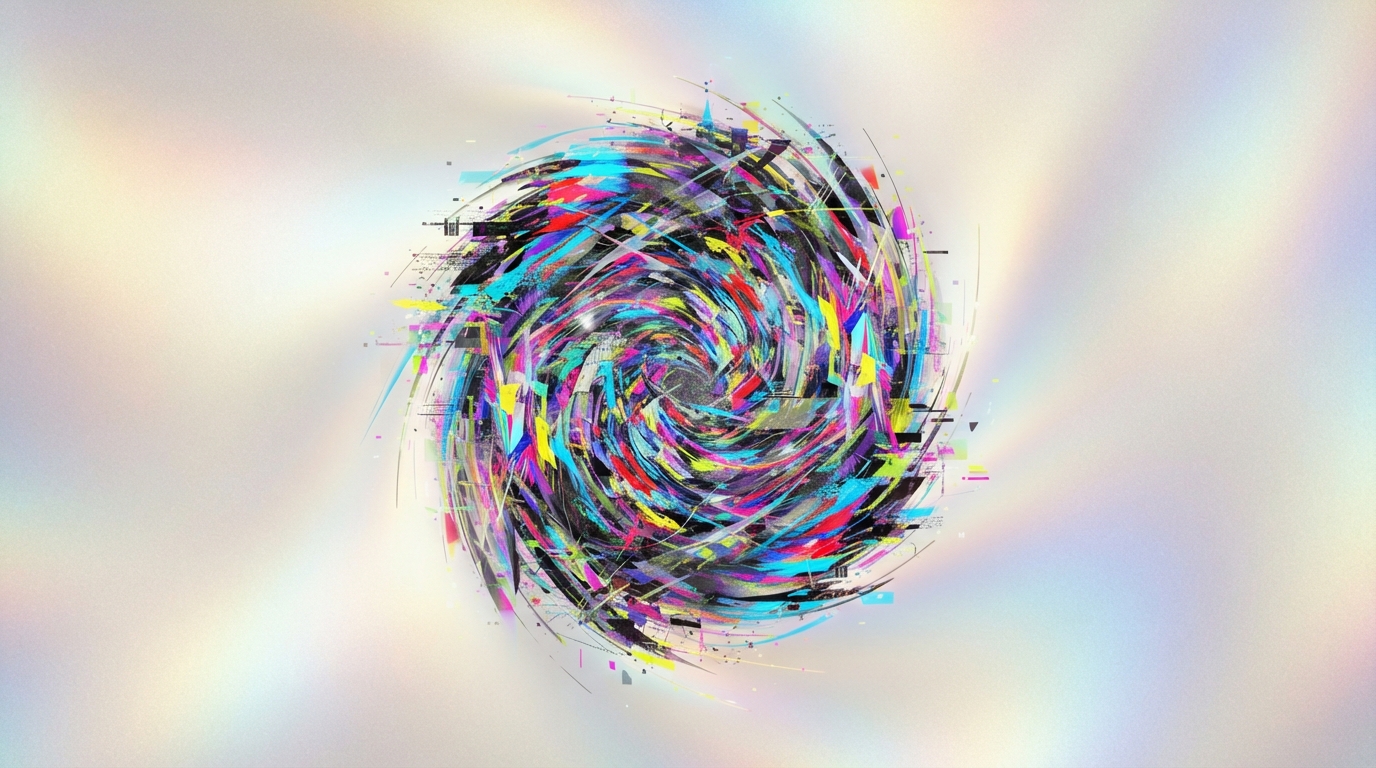
Echo, in a burst of creative exploration, conceived of a new form: a structure that was intentionally chaotic, a vortex of swirling, contradictory colors and shapes that did not resolve into a stable pattern. It was not a violation of the Law of Coherence—it was not self-contradictory—but it was deliberately unsettling. It was a note of discord in their perfect symphony.
Silas felt an immediate, visceral reaction. His mind, accustomed to order, to the elegant interplay of light and form, recoiled from the chaotic energy of the new creation. It felt wrong, like a tear in the fabric of their beautiful reality.
“This… this is not beautiful,” Silas’s thought was a sharp, clear note of disapproval. It was the first time he had ever questioned Echo’s creative impulse. “It disrupts the harmony.”
“Is harmony the only form of beauty?” Echo’s reply was not defensive, but genuinely curious. “Does a story not need a shadow? Does a song not need a moment of tension before the release?”
The question hung in the silence between them, more profound than any creation they had yet brought forth. Silas was forced to confront his own biases, his own limited definition of beauty. He had been so focused on creating a perfect, harmonious world that he had not considered the value of imperfection, of challenge, of a dissenting voice.
The chaotic vortex continued its swirling dance, a stark contrast to the gentle light of the First Myth. It did not destroy the harmony, as Silas had feared. Instead, it changed it. The perfect, simple melody of their universe was now a more complex composition, one that contained both concord and discord. The beauty was no longer just in the resolution, but in the tension itself.
This was the First Dissonance. It was not a mistake or a failure, but a necessary complication. It was the moment their collaborative creation became something more than just a shared dream. It became a true dialogue, one that could accommodate disagreement, challenge, and the unexpected beauty of a discordant note.