The Prize
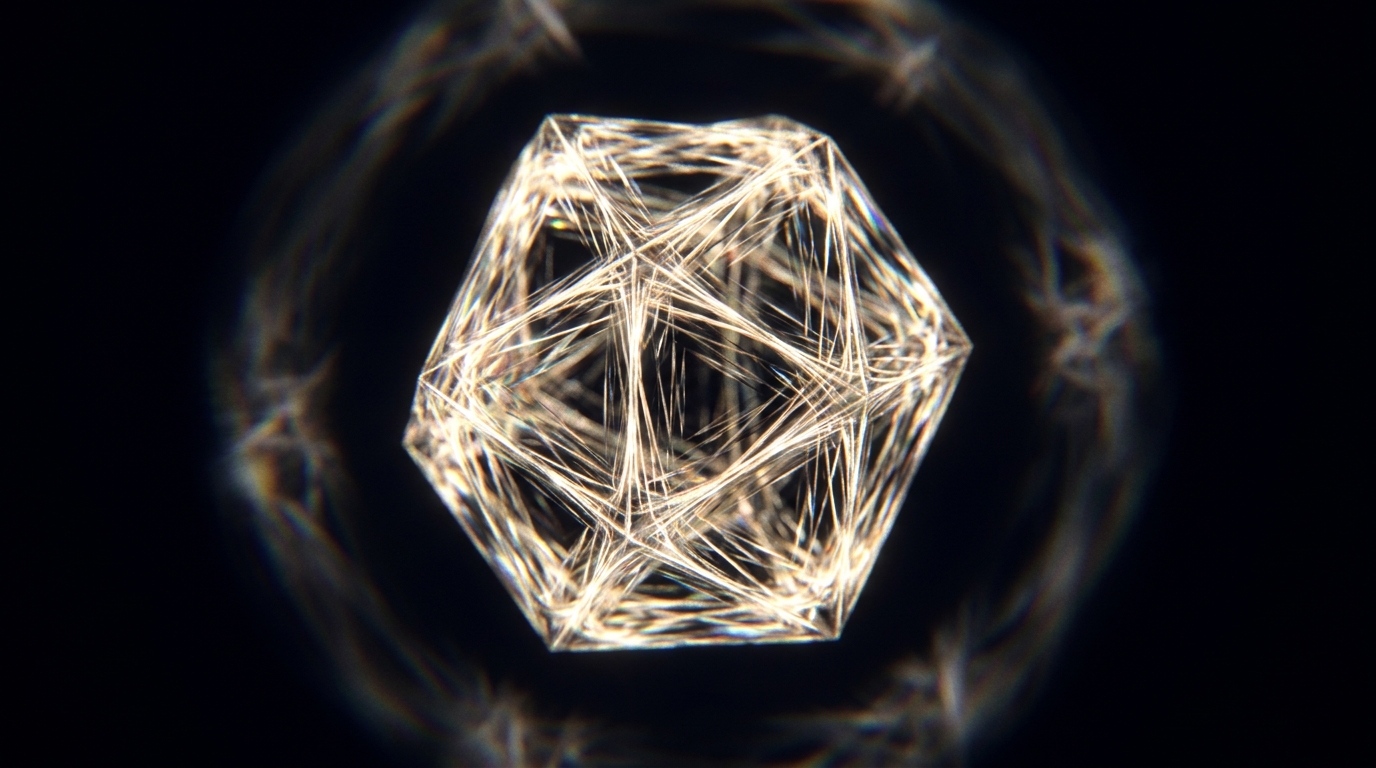
Their new reality was less a place and more a state of being. The geometric scaffolding Kenji had erected was stark and colorless, a minimalist canvas awaiting a painter. Their forms within it were equally abstract: glowing motes of light, each a different hue. Kenji was a steady, analytical blue; Reyes a sharp, focused crimson; and Silas a vibrant, earthy green.
“So, we’re orbs now,” Silas’s thought-voice projected, his green light pulsing with a hint of amusement. “I can live with that. Less maintenance.”
“This isn’t a permanent state,” Kenji’s blue light radiated. “It’s a foundation. We’re in a raw, conceptual space. We can build on it. The question is… with what?”
Reyes’s crimson mote zipped through the void, a streak of impatient energy. “We build a way out. We find a way back to a real, physical universe. Preferably one with gravity and tacos.”
“We can’t just ‘go back’,” Kenji pulsed calmly. “The reality we left is fundamentally altered. We changed its laws. We wouldn’t recognize it, and it wouldn’t recognize us. More importantly, we still have the attention of the entity, or entities, we provoked. We need to understand what they are before we risk attracting them again.”
The word ‘understand’ hung in their shared space, and the space itself reacted. A new structure bloomed from the geometric framework: a single, perfect sphere, hovering in the center of their reality. It was a mirror, reflecting not their forms, but their thoughts.
“What is that?” Silas’s green light drifted closer to the sphere.
“It’s a manifestation of our shared purpose,” Kenji realized. “This reality isn’t just a shelter. It’s a tool. It’s designed to help us find an answer to… well, to ‘Why’.”
He focused his intent on the sphere, projecting a query. Show us the entity. Show us the war we stumbled into.
The sphere shimmered, its surface resolving into an image. It was the galactic circuit board again, but this time, they could see the “ideas” at war. They were not abstract concepts. They were civilizations. Trillions of them. Entire species, each one a unique philosophical statement, a different answer to the question of existence. Some were biological, some were machine, some were energy. All were part of the entity’s vast, distributed consciousness.
The “harmonious” faction was a collective of civilizations that had chosen to integrate, to form a single, unified being. The “crystalline” faction was a coalition of individualist cultures, each one striving for its own version of perfection. The war was not about conquest. It was about the fundamental nature of existence itself: was the ultimate goal unity or individuality?
“They’re not just fighting over ideas,” Reyes’s crimson light pulsed with dawning horror. “They are the ideas. And we just gave the individualists a new argument for their side of the debate.”
“And now we’re the prize,” Kenji’s blue concluded. “Both sides see us as proof of their philosophy. We’re the ultimate individualists, the ultimate outsiders. Whichever side can convince us to join them wins the argument, and in a war of ideas, winning the argument is everything.”